

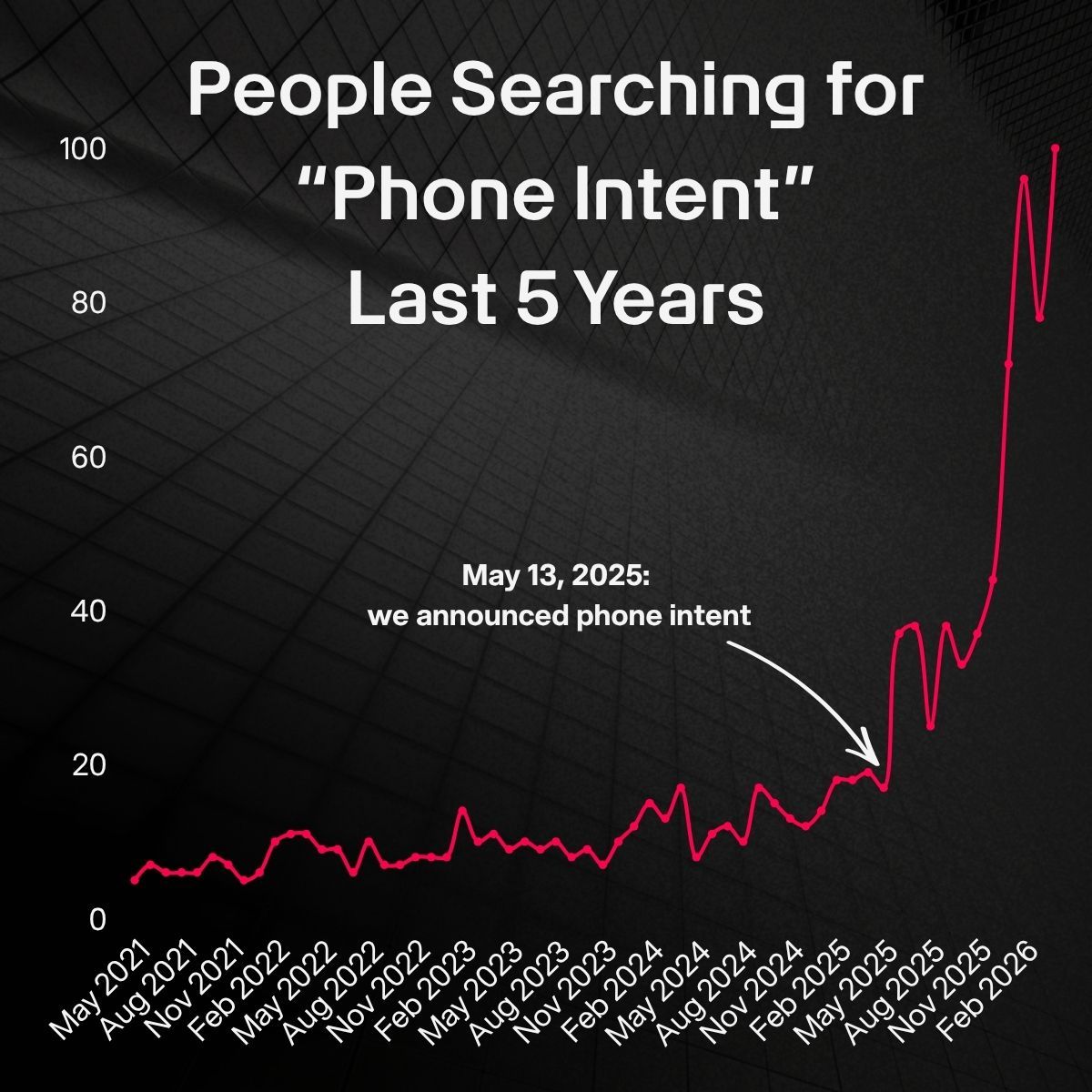
A year ago today, we coined the term Phone Intent.
Naming a category does two things at once: it teaches the buyer what to look for, and it carves out a line item in the budget. It also gives a name to the technology, so it can anchor in the buyer’s mind.
“What are we using for Phone Intent?” < that question has started to take root in our market.
But Phone Intent, and how it’s catching on, was never really about just the phone. It was the first visible crack in a much bigger divide that has split the world of B2B outbound sales in two.
Outbound is bifurcating.
Email, LinkedIn, cold calling…
Every outbound channel is splitting along the same axis. Volume on one side. Precision on the other. Bulk sender tools vs. signal-triggered sequences. Connect-request spam vs. warm-path motions. Generic retargeting vs. first-party intent.
Physics (momentum and basic math) is not on the side of those in the “volume” camp. The precision side is consolidating around fewer, sharper tools that let them get into the market with surgical precision and clinical efficiency.
2026 is the year that crack breaks wide open. There is going to be an even larger rift between the two camps, both in terms of what they believe, and how they perform.
We plan to make the dialer market the wedge that causes the first huge rupture.
Two decades of pressure - no wonder there’s a stress fracture
For 20 years, outbound dialing was a single technology category. You bought a dialer, you set your reps loose on a list, and the only variable was how many calls per hour you could squeeze out of each chair. Parallel dialing (the category was only created by Orum 6 years ago even though autodialers and predictive dialers already existed) pushed that variable to its physical limit. They started dialing prospects simultaneously on four lines, six lines, eight… until carriers started flagging the numbers as spam and connect rates collapsed to 3% or lower.
Parallel dialing means a race to zero in connect rates. What happened to email deliverability is going to happen to phone reachability. You can see the carriers changing their spam ID algorithms in real time.
So is “parallel dialing” a category? I’d argue that if a category shows this much infrastructural weakness so early in its lifetime, it’s not. At best, it was a feature that gave some dialers a short-lived differentiator.
More accurately, it’s a symptom of the split happening in outbound as a whole, and the dialer market as an example.
On one side: keep dialing harder. More lines, more numbers, more burn. Nooks owns this side. They're good at it. They're winning a real customer set. But how long can it last?
On the other side: stop dialing at random. Score contacts so you know who's going to answer before you dial. Use proprietary behavioral data, not just 3rd-party-verified data. Replace the volume game with a signal game. This is the side we made.
We call it Phone Intent, and it’s here to stay.
But we’re moving forward with it, to a completely new model for outbound execution.
You can see the split in the data already. We hit 25%+ connect rates on customer accounts where the industry average sits at 4-8% (anecdotally, lower for most audiences). Reps go from two conversations a day to fifteen. Two-rep teams replace ten-rep teams. None of that is possible in the volume model. It requires a different premise about what the phone is for.
Smart CROs know this and have already updated their headcount models in accordance.
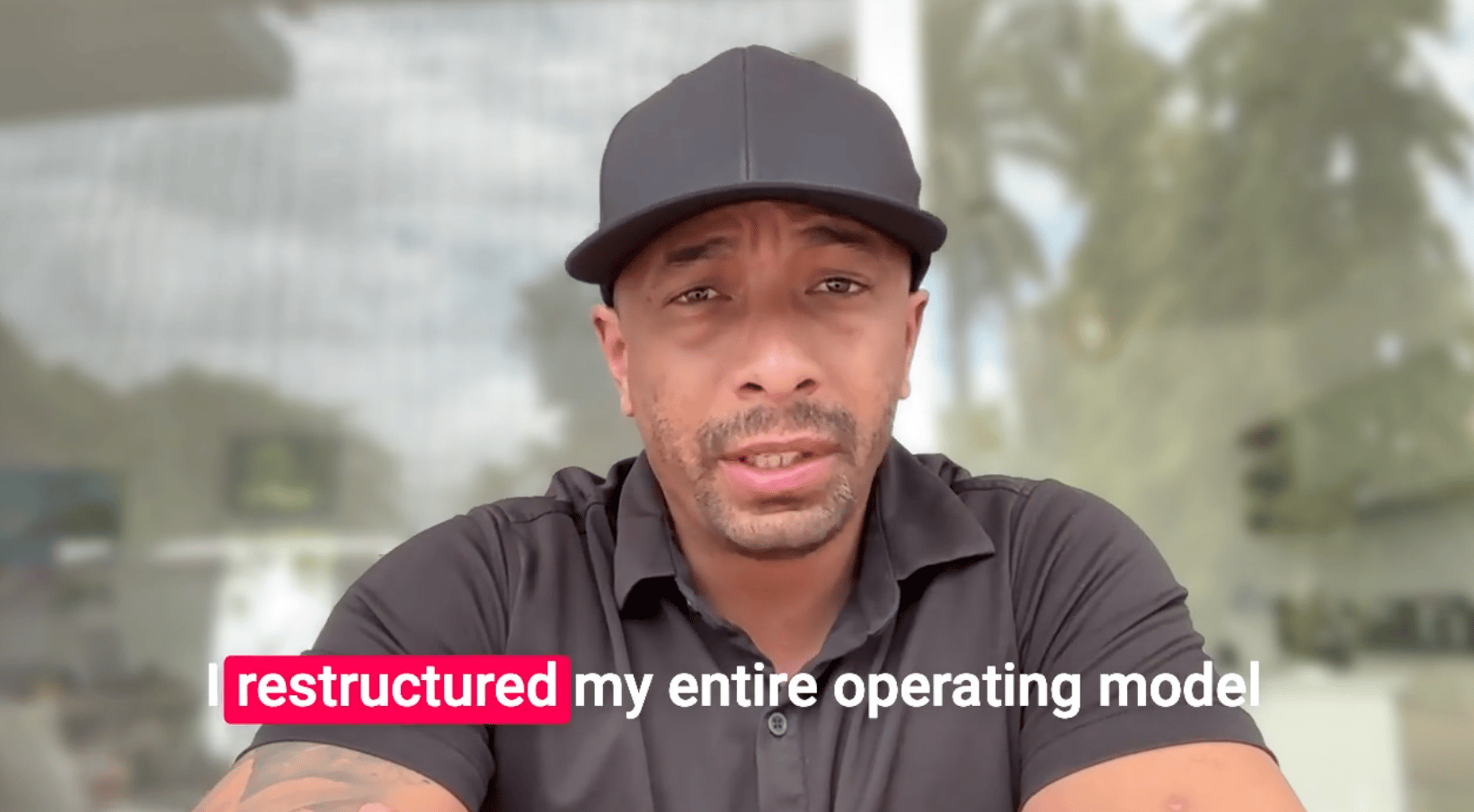
Kevin “KD” Dorsey, CRO @ Finally
How the market is voting
Three data points we take as strong evidence of decaying market fit for the volume model, and a vote of confidence in a precision approach. From smallest to largest…
- LinkedIn company pages. This is more funny than serious. The TitanX LinkedIn page grew followers 51.6% from 24 posts. 90 new followers per post. Over the same timespan, Orum posted almost 6x more (137 posts) and lost 24% of their growth rate. Salesfinity lost 23%.
Sellers want to stop wasting their time. Sales leaders want efficiency. The market is interested in precision.

- Vendr 2025 Year in Review. TitanX was ranked the 8th most-purchased new SaaS product on their platform last year. Across every category.
Vendr is a procurement system, so that list is based on actual purchase data, not voting or pay-to-play. Eighth in a market of hundreds of thousands of B2B SaaS products. We got there in 18 months, all while growing primarily through word of mouth.- Updata Partners. In January, Updata led our $27M Series A. They don't write that check unless they've seen the procurement data and verified the customer math. Capital follows category formation. They saw the same fracture we did.
What we built to own the Precision side of outbound
When you raise on a category-creation thesis, the question is whether you've built the moat fast enough to defend it.
- We have data nobody else has. No one can beat the experience of calling a TitanX high intent list for the first time. It is unique in the market. When you’ve been running into a wall for years pounding the phones, and suddenly you get
- We have a dialer built for precision from the ground up. In February, we acquired FrontSpin, one of the most-established enterprise dialers in the market. TitanX identifies who answers, FrontSpin makes sure the call gets through. That's the full loop: the highest quality data, the most robust dialer.
- The proof. Ask a TitanX customer if it works.
On the copycats: a few vendors have started positioning against us. We like that. Every vendor that enters the precision space is a vote of confidence for us, and benefits our growth more than theirs.
Nooks, for instance, sells on its “hot numbers” feature but their own team publicly admits they expect a 5% connect rate.
Some of the largest contact-data incumbents looked at building this and told us privately they can't: it requires different data, a completely different model, and is fundamentally a different problem.
And those contact data vendors are our customers, and close partners. We have enormous respect for what they do. They just do something different than us.
What's next
Last year was year one. We named the category, got the market shopping for it without any heavy marketing, and proved the math.
But one of our virtues at TitanX is Day Zero. We live and work every day like it’s our first and last chance to accomplish our mission.
So our next mission is making it impossible for sales leaders to consciously choose between precision and volume. By the end of 2026, there will be no status quo. There will be only the old way of doing things, and there will be our approach.
Which is the one with the math behind it.
The phone has always been the most powerful channel in B2B sales. It had a massive constraint: knowing who would answer. We solved that. We're about to do something even bigger.
Thanks for reading.
Evan Dunn (LinkedIn)

Staunch advocate for conversation-led growth, known for bringing scientific rigor to go-to-market models.

.svg)
.svg)
Continue Reading

Workslop ate 10% of your pipeline

Stop practicing bloodletting on your SDR org

Empire of the Inauthentic